Wednesday, December 14, 2011

A few elementary projects...


I have fallen behind with blogging while student teaching. I guess that means I am spending my time on more important things - teaching children. Here are some of the projects I have been teaching...

Can you believe those self-portraits are the work of first graders?!! I can't. I must be doing something right.

Wednesday, May 18, 2011

Teacher-Made Project Examples


Henna Lesson


Drawing and Music Lesson

Monday, April 18, 2011

Last day at the middle school - April 18

Although I have finished my fifteen hours, I decided to go in for an extra day. I wanted to talk more with the cooperating teacher about my lesson and ask her what I could improve upon. The students were still working on their clay containers, which is a fun project that I enjoy helping out with. Most of the time, I couldn't help but converse with students and help them with their projects. Now that they are familiar with me, they openly ask questions and seem to value my input and suggestions. It is disappointing that today was my last day with them. One student suggested that they throw a party for me! They were all so welcoming toward me and I will definitely miss seeing them every Monday and Wednesday.

When I asked the teacher for some advice on my lesson, she said that I did very well. She liked my PowerPoint and the content of the lesson. The students obviously enjoyed the project as well. Some suggestions were made in carrying out the lesson. It would have been beneficial to let the students "play" with the materials and get to know them on scratch paper. Next time, I will definitely do this. I did consider this strategy when planning, but I was concerned about time management. The teacher also suggested creating a brainstorming worksheet to pick out which animals would be best for their project. The projection of my voice could be improved upon, as the classroom we were in was quite large.

During some downtime, I asked the teacher what she thought about being facebook friends with students and what the social boundaries are for her. She explained that once her students earn their diploma, they have earned the privilege of being "friends" with her. There was an emphasis on private life and professional life and keeping a separation. I cannot agree with her more. She discussed how rewarding it is to keep in contact with the students who have graduated.

After I thanked her for having me in her classroom and letting her know how beneficial the experience was, she let me know that I was organized, responsible, and that I will make a great teacher. It was nice to hear her compliments and I valued all of the constructive input that she offered me.

Sunday, April 17, 2011

Chimera Project (Grading)

Ms. Alberg grading the projects:


Here are some student written reflections on the project:


Here are a few example rubrics from the lesson:


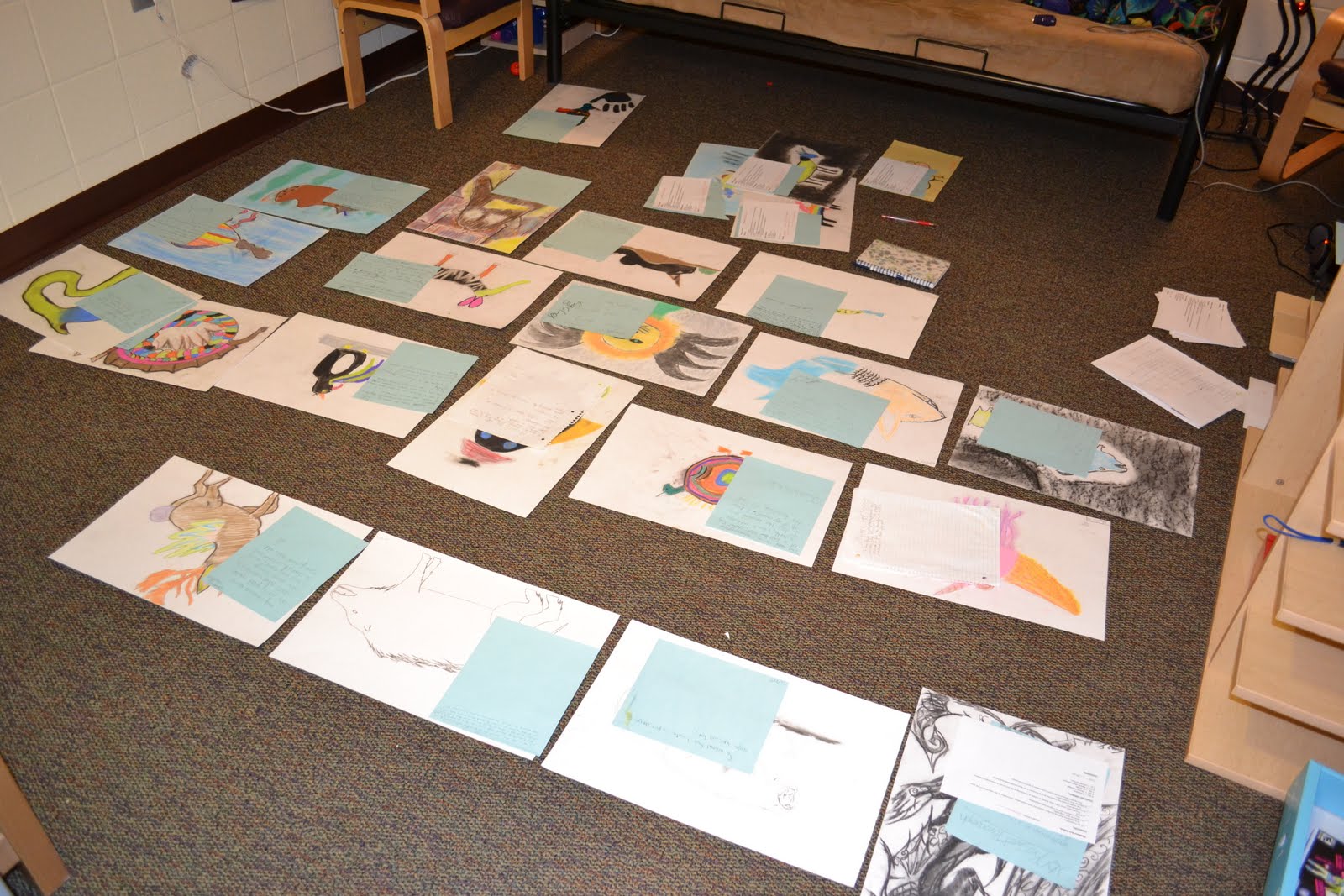
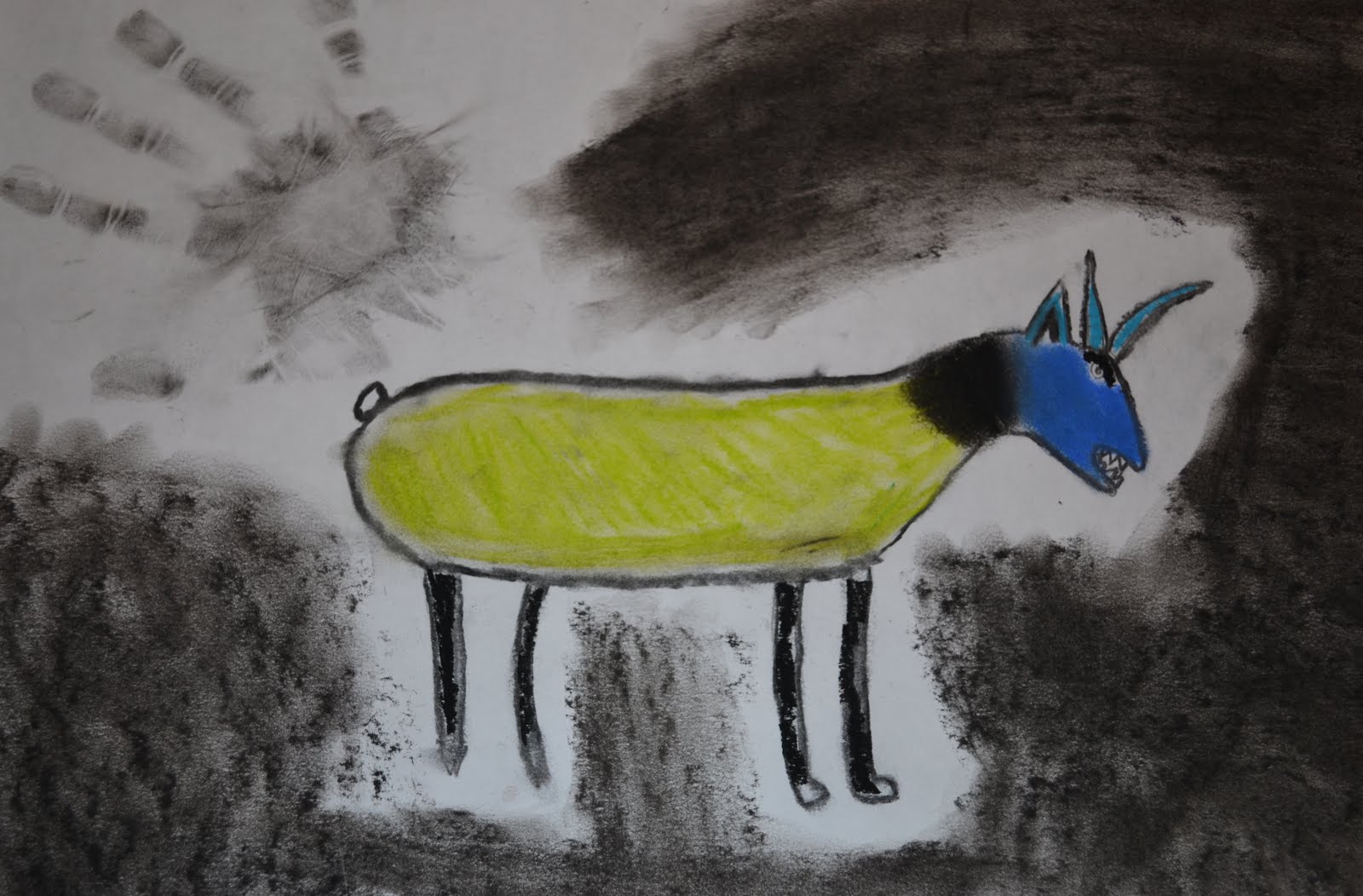
Chimera Project (Student Work)


April 13th

Today, the students did more slab rolling. They had made paper templates of their designs for the clay containers they were making. Each student took apart their templates and used the cut-outs of paper as stencils on the slabs of clay. They were cutting out slabs and attaching them using the joints (slip and score) that they had learned in the last class period I attended. The teacher showed them how to pop air bubbles, "like pimples," which got a laugh out of the students. I walked around and helped students who were behind on their templates, as well as the students who were beginning to cut out their slabs. Some students were having difficulty measuring the sides of their templates to match and fit together. I had to help them understand that the clay would be thicker than the paper and that this would throw off their measurements. One particular student was very hard for me to reach. He raised his hand and had a question about how to measure his container. He described a very complex idea to me, which I could not understand with the way that he was describing it. It did not make sense, and it was very difficult for me to communicate with him. The more I asked him to explain himself, the more frustrated he became. Defeated, I had him talk to the teacher about his design. I was completely unsure of what to do for him. I could not answer his question if he could not explain his idea to me clearly. If this was my own classroom, I would have said that if his idea is too complex to explain, it is too complex to make. Some of the students in this age group have grand ideas, but not the resources to pull it off. I don't like to hinder their ideas, but some things are just too difficult to attain in the middle school art classroom and there is only so much time to complete the projects. Many of the students had hearts in their designs. I noticed this in the last group of students as well. If this were my classroom, I would consider somehow downplaying or eliminating this cliche form, simply to challenge the students and keep them from taking the easy way out. I would have high expectations for their ideas and expressions of individuality. I would ask them questions such as, "What other forms can symbolize love?" "Is the act of making this clay container an expression of love to begin with?" "Is a heart necessary in communicating a like or love for something?"

April 11th

The teacher announced that the students would be working with clay today. She immediately wrote down the supplies that each student would need to collect on the board. She dismissed them by male and female to avoid crowds, which works well. I did not dismiss them separately during my lesson, but have learned that I need to in the future. Once all of the supplies were collected, the teacher was ready to give a demonstration. She showed the students how to decide when the clay needs water added to it and when it needs to be dried out. She went through wedging, explained how to properly use tools, and showed them how to make slabs. Once everyone had made their own slab, she took them step-by-step through the process of making joints with the slip and score process. I walked around and helped students keep up with the activity and steps. I filled containers of water and helped cut clay for students as well. I like her strategy of taking the students through the process step-by-step. It requires them to participate in the hands-on activity. I will absolutely use this in my own classroom. The one problem with this strategy is that some students cannot keep up and it is difficult to tell if a student has fallen behind. One person in charge of thirty-or-so students can be demanding and many things can be missed. When I am there to help the students work and keep up, it seems to go well, but it would be difficult to teach this way alone. When the students do fall behind, they get defeated. A good way to solve the students from falling behind is to have them raise their hands when they have finished a step so that the teacher knows when it is appropriate to continue. Although, this would be more time consuming. Overall, the students had a rewarding day of experimenting with clay.